Key Highlights
- The US moves closer to allowing crypto in 401(k) plans, signaling a major shift in retirement investment strategies.
- Regulators push balanced crypto access in retirement plans while addressing risks and legal concerns for fund managers.
- Rising savings and market growth create the right moment to introduce digital assets into long-term retirement portfolios.
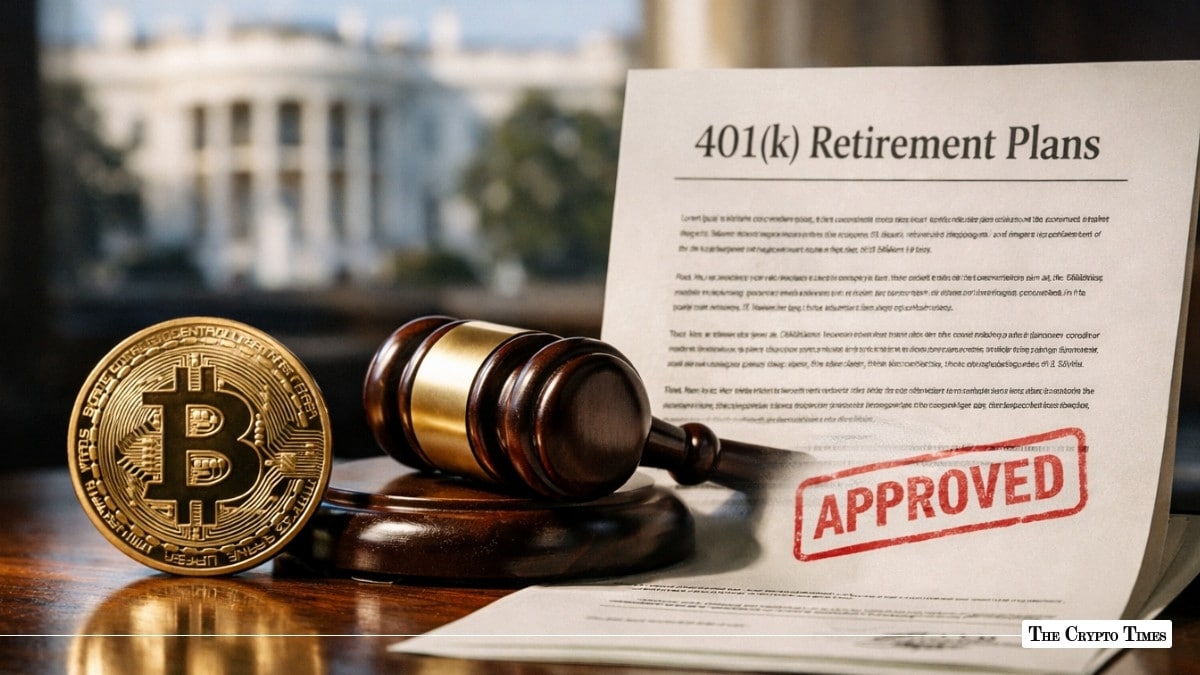
The White House has cleared a key procedural step for a Labor Department rule that could change how Americans invest in their 401(k) plans. The rule would allow retirement accounts to include cryptocurrency and private equity.
The Office of Information and Regulatory Affairs (OIRA) completed its review of the rule on March 24, clearing the way for the Labor Department to publish a proposed rule for public comment before any finalization. The proposal updates ERISA guidance, allowing plan sponsors to offer alternative investments, like cryptocurrency or private equity, in retirement accounts.
This move follows a previous executive order asking federal agencies, including the Securities and Exchange Commission (SEC) and Treasury, to review and clarify guidance surrounding alternative investments in retirement plans in accordance with ERISA fiduciary guidelines, with a 180-day deadline for the Labor Secretary to act.
This is part of a larger effort to update retirement options while managing risk. SEC Chairman Paul Atkins said in January 2026 that professional fund managers should be allowed to include digital assets carefully. In an interview with CNBC, he said, “The time is right to go forward with that in a measured way that has guardrails to protect the retirees.”
Still, wealth managers face challenges because there are no clear safe harbors. They have to balance potential growth against the risk of lawsuits if crypto markets drop sharply. Clear guidance from the Labor Department is essential to protect managers and explain how digital assets can be included safely.
Crypto inclusion amid market growth
U.S. retirement savings have also hit record levels. Fidelity Investments says average 401(k), IRA, and 403(b) balances have grown for the sixth time in eight quarters, with 401(k) balances up 5% from Q2 2025.
Sharon Brovelli, Fidelity’s President of Workplace Investing, said, “Americans are continuing to exhibit impactful savings behaviors such as staying the course and focusing on long-term goals.”
This growth suggests the timing for adding digital assets to retirement plans fits a larger trend of increasing savings.
Stablecoin legislation progresses
Stablecoin legislation also moved forward recently, with Senators Thom Tillis and Angela Alsobrooks reaching a tentative agreement with the White House. The talks focus on whether stablecoin platforms can pay yield to token holders.
Alsobrooks said the plan tries to balance innovation with protecting traditional banks. Wall Street groups warn that yield-paying stablecoins could pull money out of bank deposits, showing the tension between digital finance growth and financial stability. However, the agreement still faces several legislative hurdles before becoming law, including a Senate Banking Committee markup, a full Senate floor vote, reconciliation with the House version, and a presidential signature.
The Labor Department’s upcoming proposed rule, along with these stablecoin discussions, signals a major shift in U.S. retirement policy. The goal is to modernize investment options while keeping workers’ savings safe.
Also Read: US Court Dismisses Crypto Developer Case, Leaves Legal Uncertainty