Crypto Times Logo Black
Google News Follow Banner
  • News
    • Market
    • Bitcoin
    • Ethereum
    • Altcoins
    • Regulations & Policies
    • DeFi News
    • Blockchain News
    • Industry
  • Exclusive
    ExclusiveShow More
    GENIUS Deadline Missed, CLARITY Act Stalls on Ethics: USA’s 2 Crypto Laws Stuck
    GENIUS Deadline Missed, CLARITY Act Stalls on Ethics: USA’s 2 Crypto Laws Stuck
    2 Years of the ₹2,000 Cr WazirX Hack: The Money Never Came Back. Neither Did the Founder
    2 Years of the ₹2,000 Cr WazirX Hack: The Money Never Came Back. Neither Did the Founder
    The Robinhood Chain Paradox Built for Tokenized Stocks, Dominated by Memecoins
    The Robinhood Chain Paradox: Built for Tokenized Stocks, Dominated by Memecoins
    Senators to Brief Trump on CLARITY Act Path - Here's What to Expect
    Senators to Brief Trump on CLARITY Act Path – Here’s What to Expect
    CLARITY Act 5 Fights Still Unresolved Before the Merged Draft Drops
    CLARITY Act: 5 Fights Still Unresolved Before the Merged Draft Drops
  • Opinion
    OpinionShow More
    The Execution Gap: Why the Next Breakthrough in Financial AI is Human Behavior
    The Execution Gap: Why the Next Breakthrough in Financial AI is Human Behavior
    The Bitcoin Treasury Blueprint What Stress Testing on Strategy Inc.’s MSTR-STRC Reveals
    The Bitcoin Treasury Blueprint: What Stress Testing on Strategy Inc.’s MSTR-STRC Reveals
    Why Wall Street is Divided Michael Saylor’s Scarcity vs. Tom Lee’s Staking Empire
    Why Wall Street is Divided: Michael Saylor’s Scarcity vs. Tom Lee’s Staking Empire
    The Arthur Hayes Paradox Macro Prophet or Market Opportunist
    The Arthur Hayes Paradox: Macro Prophet or Market Opportunist?
    RBI Denies Gold Sale Amid Oil Crisis: Could It Speed Up India's Digital Rupee Push?
    RBI Denies Gold Sale Amid Oil Crisis: Could It Speed Up India’s Digital Rupee Push?
  • Learn
    • Explained
    • How To
    • Insights
  • Videos
  • More
    • About Us
    • Our Authors
    • Contact Us
    • Editorial Policy
The Crypto TimesThe Crypto Times
  • All News
  • Market
  • Bitcoin
  • Ethereum
  • Altcoins
  • Regulations & Policies
  • Blockchain
  • DeFi
  • Industry
  • Exclusive
  • Opinion
Search
  • News
    • Market
    • Bitcoin
    • Ethereum
    • Altcoins
    • Regulations & Policies
    • Blockchain
    • DeFi
    • Industry
    • Exclusive
    • Opinion
  • Learn
    • Explained
    • How To
    • Insights
  • Quick Links
    • About Us
    • Our Authors
    • Contact Us
    • Editorial Policy
    • AI Policy
    • Sponsored & Advertorial Policy
  • Videos
  • Glossary
Follow US
© 2026 By Crypto Times. All Rights Reserved.
Regulations & Policies

Donald Trump Mandates 2031 Post-Quantum Deadline as Crypto Races to Upgrade

Flanked by new White House directives pushing federal agencies toward post-quantum cryptography, blockchain projects are accelerating their own roadmaps to counter future "Q-Day" threats.

Written By Divya Mistry
Published 2026-06-23
Make The Crypto Times preferred on GoogleGoogle
Share
Donald Trump Mandates 2031 Post-Quantum Deadline as Crypto Races to Upgrade
Show AI Summary
Foreign intelligence agencies are intercepting and storing encrypted data to decrypt later with quantum computers, posing a critical national security threat
A rapid quantum transition is needed due to advancements in quantum computing, with experts estimating a 10% chance of cryptography being broken by 2030 and 50% by 2032
The US government has set a 2030 deadline for upgrading key establishment systems and 2031 for federal digital signature infrastructure to meet National Institute of Standards and Technology-approved standards

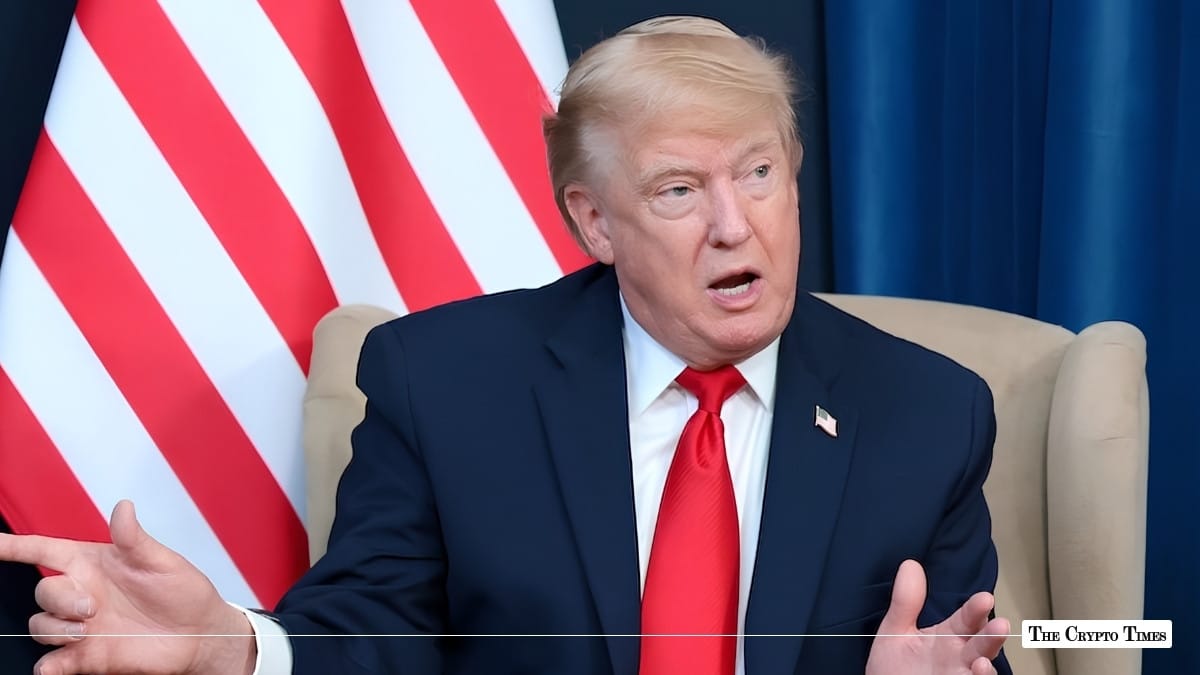
President Donald Trump has signed two executive orders designed to rapidly transition the United States to a post-quantum security footing while aggressively stimulating domestic quantum computing infrastructure.

The dual directives, announced by the White House on Monday, set strict, legally binding timelines for federal agencies to overhaul their core cryptographic standards before advanced quantum processors become capable of shattering modern encryption protocols.

Under Executive Order 14409 (“Securing the Nation Against Advanced Cryptographic Attacks”), the administration establishes a hard cutoff date of December 31, 2030, for upgrading key establishment systems, and December 2031, for upgrading all federal digital signature infrastructure to National Institute of Standards and Technology (NIST)-approved standards. 

White House pushes for faster cybersecurity transition

The White House direct advisories emphasize that waiting for fault-tolerant quantum computers to physically materialize is a critical strategic error. 

The core of the immediate national security crisis lies in “harvest now, decrypt later” operations. Foreign intelligence agencies are actively intercepting and storing massive swathes of highly classified, encrypted government and corporate data today. Though unreadable right now, this data will be instantly cracked the moment a cryptographically relevant quantum computer (CRQC) is achieved, an inflection point the tech sector commonly refers to as “Q-Day.” 

To break the administrative logjam, Trump has ordered the Department of Commerce and NIST to spin up an internal PQC migration pilot project within the next 180 days, with an explicit mandate to finalize the test framework by December 31, 2027.

Concurrently, Executive Order 14411 sets down an industry-facing roadmap to insulate the domestic quantum supply chain. The directive launches the Quantum Computer for Application Development and Discovery Science initiative, requiring an updated national quantum strategy and next-generation sensor development benchmarks by late 2028.

Crypto scrambles to eliminate Q-Day exposure

Public blockchains rely fundamentally on elliptic-curve cryptography to secure wallets and validate transactions, therefore the sudden acceleration in Washington’s quantum roadmap is reverberating deeply across the digital asset industry. The threat is no longer a distant theoretical exercise; it is a rapidly approaching mathematical reality. Citing non-public industry developments, Ethereum Foundation researcher Justin Drake, a co-author on a seminal Google Quantum AI research paper, recently escalated the estimated risk timeline, placing the odds of a quantum computer breaking live production cryptography at 10% by 2030, rising to a staggering 50% coin-flip by 2032.

This panic was triggered by a massive algorithmic optimization. Google Quantum AI revealed that Shor’s algorithm can crack secp256k1 (the specific elliptic curve securing both Bitcoin and Ethereum signatures) using fewer than 500,000 physical qubits in under nine minutes. Even more alarming, stealth hardware startup Oratomic recently asserted that using neutral-atom hardware, the same attack could be executed with just 10,000 physical qubits.

As the true scale of the countdown sets in, a fragmented layer-1 arms race has broken out across the industry, with networks rushing to implement defensive roadmaps before their historical stockpiles are harvested:

  • Ethereum’s 7-Cent Safehouse: Rather than waiting for a full network hard fork, Nicolas Consigny, lead of the Ethereum Foundation’s Kohaku project, introduced a low-overhead proposal dubbed SPHINCS-. The approach adapts NIST-approved signatures to drastically drop on-chain verification costs, allowing account-level protection for a transaction cost as low as $0.07 per wallet.
  • Algorand’s 2027 Blueprint: The Algorand Foundation has unveiled a comprehensive protocol roadmap to achieve systematic quantum resistance by the close of 2027. The PoS network intends to deploy native, Falcon-based post-quantum signatures and hybrid account models starting late this year.
  • Ripple’s 2028 XRPL Shift: RippleX unveiled a comprehensive four-phase roadmap to make the XRP Ledger fully quantum-resistant by 2028. Phase 1 introduces an immediate “Quantum-Day” emergency breaker that would halt classical signatures and force a migration to quantum-safe accounts using post-quantum zero-knowledge proofs. Ripple holds a massive structural advantage in this transition: the XRPL supports protocol-native key rotation, enabling users to swap out compromised keys without needing to move funds to entirely new accounts.
  • The Bitcoin Stockpile Dilemma: Unlike Ethereum’s deterministic block intervals and private mempools, Bitcoin’s 10-minute block times are highly vulnerable to live transaction hijacking via fast-clock quantum systems. Furthermore, Bitcoin faces a staggering legacy stockpile risk: an estimated 1.7 million to 2.3 million BTC are currently locked in dormant, legacy Pay-to-Public-Key (P2PK) addresses where the public keys sit completely exposed on-chain.

With major ecosystems similarly scrambling to rewrite their baseline cryptographic primitives, the White House’s 2031 federal mandate serves as an official confirmation of what cryptographers already knew: the clock is ticking, the math is public, and the window for an orderly post-quantum migration is closing rapidly.

Also Read: What is Q-Day? The Quantum Deadline for the Crypto Industry to Upgrade

Disclaimer: The information researched and reported by The Crypto Times is for informational purposes only and is not a substitute for professional financial advice. Investing in crypto assets involves significant risk due to market volatility. Always Do Your Own Research (DYOR) and consult with a qualified Financial Advisor before making any investment decisions.

Follow The Crypto Times on Google News to Stay Updated!      Google News

TAGGED:CryptocurrencyDonald TrumpUnited States
Share This Article
Whatsapp Whatsapp LinkedIn Telegram Copy Link

Latest News

USHCC Joins Opposition to CLARITY Act Ahead of Senate Vote
CZ Reacts to BitMEX Shutdown as BMEX Token Drops 90%
Goldman Sachs CEO Joins Growing Push Behind CLARITY Act
Lummis Cites BlockFi, Genesis to Push CLARITY Act Protections
Ethereum (ETH) Price Trades 17% Below Realized Price — On-Chain Data Signals Caution

Find Us on Socials

You may also like

BlackRock, Fidelity Back $15M Bitcoin Security Consortium but Vow No Control

BlackRock, Fidelity Back $15M Bitcoin Security Consortium but Vow No Control

EU Crypto Measures Survive Diluted Sanctions Package as Russia Legalises Crypto Trade

EU Crypto Measures Survive Diluted Sanctions Package as Russia Legalizes Crypto Trade

Yet Another Corporate Bitcoin Sale: Smarter Web Repays $11.69M TOBAM Debt by Selling 178 BTC

Yet Another Corporate Bitcoin Sale: Smarter Web Repays $11.69M TOBAM Debt by Selling 178 BTC

Seven Democrats Say CLARITY Act Text 'Falls Short' as Thune Eyes Floor Vote

Seven Democrats Say CLARITY Act Text ‘Falls Short’ as Thune Eyes Floor Vote

The Crypto Times Logo PNG

Providing real-time, accurate Crypto reporting. Your trusted source for Crypto News and Research.

Stay Updated

All News
Exclusive
Opinions
Learn
Videos
Glossary

Company

About Us
Our Authors
Editorial Policy
AI Policy
Advertorial Policy

Get In Touch

Contact Us
Career

Find Us on Socials

X-twitter Linkedin Telegram Youtube Instagram

© 2026 The Crypto Times | A BITROCK TECHNOLOGIES L.L.C. Company.

DMCA.com Protection Status
  • Terms and Conditions
  • Disclaimer
  • Privacy Policy
  • Cookie policy
Do Not Sell or Share My Personal Information